2023-11-30 National Mousse Day 【The Poem as Icon (1954)】 Wallace Stevens (1879—1955) It is not enough to cover the rock with leaves. We must be cured of it by a cure of the ground Or a cure of ourselves, that is equal to a cure
Of the ground, a cure beyond forgetfulness. And yet the leaves, if they broke into bud, If they broke into bloom, if they bore fruit,
And if we ate the incipient colorings Of their fresh culls might be a cure of the ground. The fiction of the leaves is the icon
Of the poem, the figuration of blessedness, And the icon is the man. The pearled chaplet of spring, The magnum wreath of summer, time's autumn snood,
Its copy of the sun, these cover the rock. These leaves are the poem, the icon and the man. These are a cure of the ground and of ourselves,
In the predicate that there is nothing else. They bud and bloom and bear their fruit without change. They are more than leaves that cover the barren rock.
They bud the whitest eye, the pallidest sprout, New senses in the engenderings of sense, The desire to be at the end of distances,
The body quickened and the mind in root. They bloom as a man loves, as he lives in love. They bear their fruit so that the year is known,
As if its understanding was brown skin, The honey in its pulp, the final found, The plenty of the year and of the world.
In this plenty, the poem makes meanings of the rock, Of such mixed motion and such imagery That its barrenness becomes a thousand things
And so exists no more. This is the cure Of leaves and of the ground and of ourselves. His words are both the icon and the man. —— • —— • —— • —— • —— • —— • —— • —— 【《偶像性诗歌》(1954)】 华莱士·史蒂文斯“异乡人·花环”(1879生—1955卒) 【红霞译】 光用树叶覆盖岩石尚不充分。 我们必须去治疗就像用大地的良药 或我们自己的良药,无异于治疗
大地,超越遗忘的治疗。 然而树叶,如果抽枝发芽, 如果花儿盛开,如果结出果实,
如果我们吃掉最初的色彩 新鲜采摘的果实也许是大地的良药。 树叶的虚构是诗歌的
偶像,祝福的比喻, 而偶像是人。春天的珍珠花朵, 夏天的凤仙花环,秋天的发卡花巾,
太阳的复制品,覆盖岩石。 这些树叶是诗、是偶像、是人。 是大地的良药以及我们自己的良药,
在谓语中没有别的意思。 它们抽枝发芽、花儿盛开、结出果实,毫无变化。 它们不光是覆盖贫瘠岩石的树叶。
它们长出最苍白的眼睛,萌发最纤弱的枝桠, 在感知形成中带来新的感知, 渴望到达距离的终点,
让身体充满活力并将心灵植到生命。 一如人之爱绽放,一如他在爱中活着。 它们结出果实以此记住岁月,
仿佛其感知是棕色的皮肤, 果肉里的蜜汁,最终的发现。 充足的岁月和世界。
于此,诗歌造就了岩石的意义, 这样的混合运动和这样的意象描述 岩石的荒凉变成千百种事物
从而不复存在。这是 树叶的、大地的、我们自己的良药。 他的话语既是偶像也是人。 【注】秋风扫落叶,最是好时节。每到秋末,院子里总有一场与落叶的拉锯战——前脚刚扫成一堆,后脚风一吹,又散得满地都是。可这拾掇落叶的时刻,偏偏又预示着一连串节日的临近:感恩节的火鸡、圣诞节的彩灯、新年的钟声,都藏在这层层叠叠的落叶下面,等着被翻出来。我每年都在这时候扫院子,一边嫌叶子落得没完没了,一边又暗自盼着它们快些落尽——因为叶子落完了,人就该回来了。 今年纽约仔回宾夕法尼亚“山林”州过感恩节时,树上的叶子还没掉光。那些金黄的、橙红的叶子,还密密地挂在枝头,在十一月的阳光下闪闪发光。他在院子里站了一会儿,仰头看着那些叶子,忽然说:“今年叶子落得晚。”是啊,落得晚。往年他回来时树已经秃了,叶子早被秋风扫尽,干干净净,像是刻意为了迎接他而清空了一切。可今年不同,叶子还在,秋天还在,那种“又要走了”的感觉,却已经在空气里悄悄弥漫开来。 感恩节那几天,我们一起扫了两回落叶。他握着耙子,我拎着袋子,阳光从稀疏的枝丫间漏下来,落在我们肩上。他讲着纽约的事——实习的老板有点意思,公寓的暖气总不够热,地铁里又遇上奇怪的人。我听着,偶尔插一句嘴,手里的活儿却没停。等他一走,院子里又落满了叶子。我站在窗前,看那片金黄在风里打着旋,落下来,又卷起来。忽然觉得,这些叶子像是在替他陪着我——从早到晚,一片接一片地落,落得很慢,慢到让人觉得时间真的可以停下来。秋风还在扫,落叶还在飘,而他已经回到他的地方去了。可我知道,明年这个时候,叶子还是会落,他还是会回来,而我们还是会一起握着耙子站在院子里,像什么都没变过一样。只是今年多了一个念头:那些他没来得及带走的叶子,我会替他一直留着,留到风把它们吹进下一场雪里。那时候我大概不会专门记起哪一片叶子——但站在窗前时,心里会有一种安静的确定,像秋天本身答应过什么一样。那种确定,不来自语言,只来自季节反复确认过的形状。 Today in History(历史上的今天):
2019 Thanksgiving @ CGCC, PA(宾州·2019年神州基督教会感恩节) 2014: Book Review─Urban Outlaws(书评─浅议《城市水浒传》) 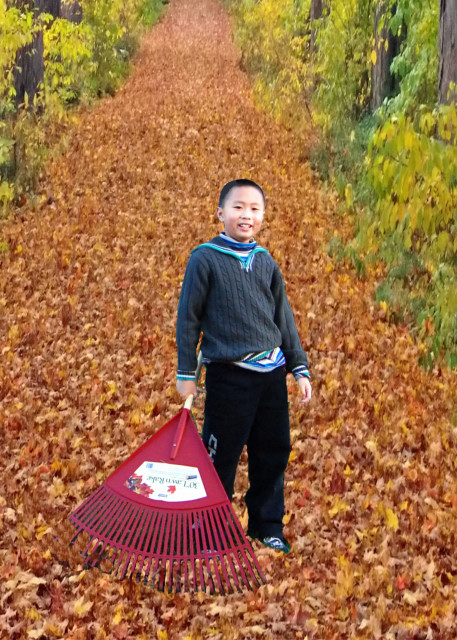
2nd Grader to Haul Leaves (小学二年级生薅秋叶 11-28-2010) 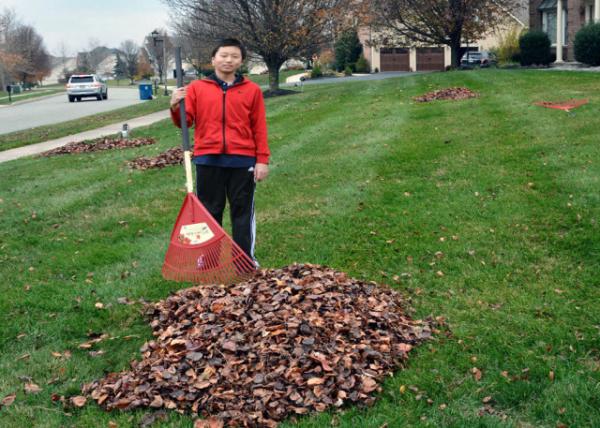 8th Grader to Rake Leaves (初三生撸秋叶 11-25-2016) 8th Grader to Rake Leaves (初三生撸秋叶 11-25-2016)
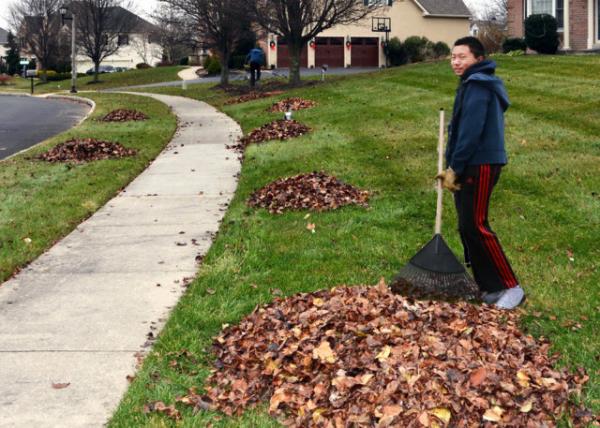 9th Grader to Pile up Leaves (高一生捋秋叶 12-09-2017) 9th Grader to Pile up Leaves (高一生捋秋叶 12-09-2017)
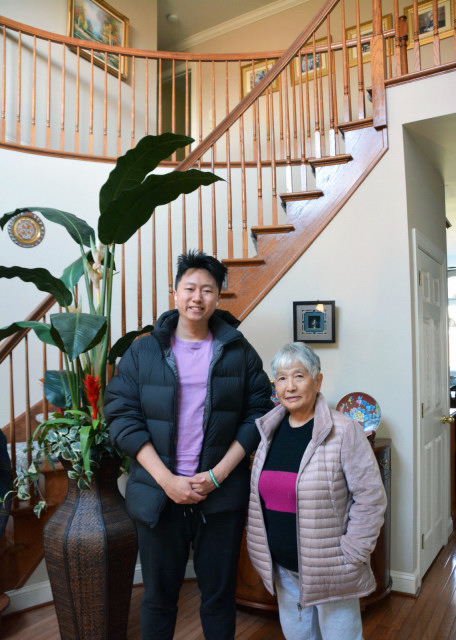
15th Grader (Junior) Heading back to School after Thanksgiving (大三生感恩节后返校 11-25-2023) 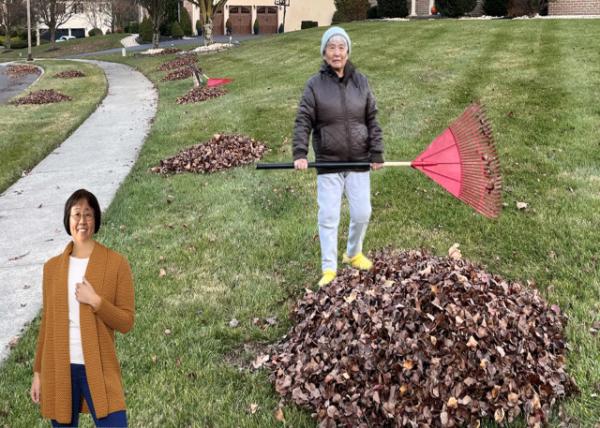 Leaf Collection (万叶集 11-30-2023) Leaf Collection (万叶集 11-30-2023)
Crosslink(相关博文): Junior(大学三年级'2023-24) |