2018-08-20
【Aiden in English】
Mixed between the constant ingestion of food and sweating, this summer trip was sprinkled with visits to friends in China. Friends typically meant old college folks Mom hadn't seen in three decades, so most of the time, I felt detached from the conversation, hence the time to write these journal entries. Each friend often gave long, elaborate hellos, which were cut short by my mom to fit within the time slot of a busy week. Regardless, they talk a bit, catching up on some face-to-face time. There I stood, staying silent, smiling, and nodding for the next 10 minutes as my mother wandered about everything from Grandma's condition to the terrible dog days. Eventually, the conversation grinds to a halt, and they realize I'm standing in the corner of their vision. They ask the general queries: "How old are you? What grade are you in? What do you want to do?" I answer with the least number of words possible. Besides, I justified my actions by giving Mom more time to reacquaint with old friends. This typically leads to a meal, followed by a trip to a local attraction. Today's attraction isn't as regional as its popularity might suggest; the dubbed 'local attraction' has garnered enough popularity to earn it the title of UNESCO Heritage. By now, that means nothing about its importance (the world is a whole of heritage and shouldn't be labeled), but wherever that title goes, so do people. Purple Mountain Scenic Area wasn't as crowded as the city, but the crowd at the temple was relatively small. Buddhist temples are among the quieter places in China, mainly because their sacred aspects limit the loud shouting. The places we visited today were a part of the scenic complex, Sun Yat-Sen Mausoleum, the Ming Filial Mausoleum, the Spirit Valley Temple, and a string of temples dedicated to critical Buddhist figures, such as Tripitaka (Tang Monk) and Bodhisattva (Guanyin). While I may not know much about Buddhism, my childhood was filled with enough 'Journey to the West' to understand the red mat placed in neat rows before the Buddha and God as prayer mats. No one prayed, but many people took pictures, which in today's world is a symbol of respect. I'm not going to lie; this journey through the temples was quite strenuous. One of the notable aspects of ancient Chinese monuments was that the emperors' ordering their construction always had a large workforce available. Therefore, everything can be scaled to enormous proportions without an excessive amount of time, as seen in European projects. Examples of these massive projects completed in short periods include the Great Wall, the Terra-cotta Warriors, the Forbidden City, and many more, such as the Ming Filial Mausoleum, a huge grave for a single person. In addition to the spectacular decoration featuring balusters, civil officers, and generals along the Wengzhong Path, animals were also used as protectors. Lions, horses, unicorns, Xiezhi, elephants, and camels became popular on the Stone Elephant Road. A large ring around a garden brings us to the focus: the first emperor's grave. Compared to the rest of the area, it seemed a bit small. Essentially, the tomb layer behind a moderately sized shrine is empty of decor yet filled with people. Behind lay a mound of grass, and underneath, some decomposed pile of dirt previously known as the "Tomb of Emperor Ming Taizhu Here." That officially marked the end of the historical section of today; the rest was for friends and food, which, as the days pass, this China visit is growing closer and closer. Later, we met another friend. And another. One of them used to be an old neighbor from my grandma's younger years, which seems impossibly unfathomable. A few hellos and painful gift-giving ceremonies later, Mom and I stepped back into the hotel room, and as usual, we were sweaty and dehydrated. As for tomorrow, more of the same. Friends, family, a banquet, and a bit of history await. 【紅霞譯】
暑假藉回國之際我們走親訪友,既然參加聚會必定湖吃海喝,只要趕赴飯局終將大汗淋漓,而到場的朋友一般都是媽媽學生時代並且久違卅年的老同學,因此多數情況下,甭管他們談論什麼我都插不上嘴接不上岔,只能粗略地劃拉幾筆流水賬。大家湊在一起往往有說不完的話聊不完的天,媽媽爭分奪秒,將僅有的一周行程安排得滿滿登登,這樣總算在故鄉逗留期間親自拜見各位父老鄉親。
我站在旁邊一言不發,接下來十分鐘裡,時而咧嘴微笑,時而點頭致意,媽媽則打開話匣子,從外婆的身體狀況到離譜的三伏天氣,好不容易收住談話,這時他們方才注意到我依舊站在眼皮底下,進而聊起家常話:“多大嘍?上幾年級啦?想幹什麼呀?”
我儘量簡略作答,以便省出時間讓媽媽多跟老朋友嘮嘮嗑,通常總會狠搓一頓,酒足飯飽之後再滿世界轉悠。今天的景點當地人並不稀罕,但因其名聲在外而被認定“聯合國教科文組織世界遺產所在地”,其實沒啥值得大驚小怪的,殊不知如今世界遺產遍地開花,但“花趕春潮人逐夢,絮追風信棹隨波”,凡是名勝古蹟的地方常常人滿為患。
紫金山風景區沒有南京城擁擠,正巧寺廟本身也容不下過多民眾,中國的佛教聖地都比較安靜,主要因為廟內嚴禁喧譁。今個兒我們的目的地位於景區內,諸如中山陵、明孝陵及靈谷寺及一系列供奉唐僧玄藏與觀世音菩薩這類著名佛祖的廟宇,儘管我並不了解佛教,但童年時代看過無數遍電視片《西遊記》,多少對佛尊神祗前排列整齊的禱告紅墊略知一二。前來膜拜的教徒有限,現場照相的遊客屈指可數,表明人們懷揣敬仰之意。
論真格的,參觀寺廟非常消耗體力,要知道中國歷代古蹟都是基於皇帝指令全民老少齊上陣的結果,因此興建任何玩藝毋需像歐洲那樣花費很長時間,短期完工的例子不勝枚舉,譬如長城、兵馬俑、故宮等等,明孝陵同樣也不例外。偌大的墓地竟是為一個人所建,裡面除了裝飾翁仲路神道兩側的望柱、文臣、武將之外,動物也被搬出來充當護駕。石像路上獅子、駿馬、麒麟、獬豸、大象、駱駝等姿態威武,花園周圍有一條主道直搗腹地:明朝朱元璋墳地。坦率地說,與整個陵園相比,陵墓顯得小了點;從本質上講,墓地位於面積適中的神殿背後,平淡無奇的過道上擠滿了人群,後院有一個長滿青草的土包,土包下方石塊上刻有“此山明太祖之墓”。至此,我們今天的出遊正式宣告結束,剩下的時間便用來與朋友吃喝玩樂,日月如梭光陰似箭,這趟回國之旅逐漸接近尾聲。 稍後不久,我們與一撥又一撥的朋友見面,其中有一家先前曾是外婆前後院的老鄰居,簡直不可思議。寒暄了幾句並贈送闊別禮物之後,我和媽媽返回酒店,跟往常一樣,渾身汗流浹背幾近虛脫。明天將是今天的翻版,朋友、家人、宴會、歷史文化正呼喚着我們。 Today in History(歷史上的今天):
2018: Nanjing Ming Filial Mausoleum, China(南京明孝陵) 2018: Nanjing Spirit Valley Temple, China(南京靈谷寺) 2017: Speyer—2027 Years of Glory, DE(德國尖塔城—二千零廿七年頌歌)
2017: Speyer the Emperor Burial Place, DEU(德國尖塔城—皇陵聖地) 2017: Speyer Cathedral, Germany(德國尖塔城大教堂) 2017: Mannheim—UNESCO City of Music, DEU(德國沼澤地市—聯合國科教文之音樂城)
2017: Ludwigshafen—BASF SE, DEU(德國名將港—世界最大的化學公司巴斯夫總部) 2017: Heidelberg the University Town, DEU(德國荒山市—大學城) 2017: Heidelberg—UNESCO City of Literature, DEU(德國荒山市—聯合國科教文之文學城)
2017: Heidelberg Castle, Germany(德國荒山市城堡) 2017: Heidelberg the Dandy Horse, Germany(德國荒山市—駿馬之城) 2015: Garden Expo Park, Beijing(北京園博園) 2014: Scrimmage in Soccer Practice(足球訓練中的混戰)  Xuanwu Lake, the "Pearl of Jinling" & the Largest Imperial Garden South of the Yangtze River Xuanwu Lake, the "Pearl of Jinling" & the Largest Imperial Garden South of the Yangtze River
(玄武湖·“金陵明珠”,長江以南最大的皇家園林 02-23-1986)  Gateway to Dr. Sun Yat-sen's Mausoleum Gateway to Dr. Sun Yat-sen's Mausoleum
(中山陵·牌坊 08-20-2018)  Dr. Sun Yat-sen's Mausoleum, the Grand Final Resting Place of the "Forerunner of the Revolution" Dr. Sun Yat-sen's Mausoleum, the Grand Final Resting Place of the "Forerunner of the Revolution"
(中山陵·“中國近代之父”和“革命先驅”孫中山先生的安息之地)  Tablet Pavilion, Symbolizing the "Bell of Freedom" for China's Democratic Revolution @ Dr. Sun Yat-sen's Mausoleum Tablet Pavilion, Symbolizing the "Bell of Freedom" for China's Democratic Revolution @ Dr. Sun Yat-sen's Mausoleum
(中山陵碑亭·象征着中國民主革命的“自由之鐘” 08-20-2018) 
Tablet of Dr. Sun Yat-sen's Mausoleum (中山陵·墓碑)  Xiaojing Tripod, a Bronze Tripod Incense Burner Symbolizing Reverence @ Dr. Sun Yat-sen's Mausoleum Xiaojing Tripod, a Bronze Tripod Incense Burner Symbolizing Reverence @ Dr. Sun Yat-sen's Mausoleum
(中山陵孝經鼎·象徵着崇敬之情的青銅三腳香爐)  Ming Filial Mausoleum, the Tomb of the Hongwu Emperor, Zhu Yuanzhang, Founder of the Ming Dynasty, Added to the UNESCO Heritage Sites in 2000 Ming Filial Mausoleum, the Tomb of the Hongwu Emperor, Zhu Yuanzhang, Founder of the Ming Dynasty, Added to the UNESCO Heritage Sites in 2000
(明孝陵·明朝締造者洪武皇帝朱元璋之陵,2000年被聯合國教科文組織納入《世界遺產名錄》 08-20-2018)  Central Stadium, the Former Site for the Central Stadium of Nanjing Sport Institute Central Stadium, the Former Site for the Central Stadium of Nanjing Sport Institute
(南京體育學院·中央體育場舊址 08-20-2018)  Famous Oriental Sycamore of Nanjing Sport Institute Famous Oriental Sycamore of Nanjing Sport Institute
(南京體育學院網紅樹·東方梧桐 08-20-2018)  Great Lawn of Nanjing Sport Institute, a "Cradle of World Champions" in China Great Lawn of Nanjing Sport Institute, a "Cradle of World Champions" in China
(南京體育學院大草坪·中國的“世界冠軍搖籃” 08-20-2018)  Post Museum in Republic of China, the Place Song Mei-ling, Wife of Chiang Kai-Shek, Used to Mail Her Letters in the 1930s Post Museum in Republic of China, the Place Song Mei-ling, Wife of Chiang Kai-Shek, Used to Mail Her Letters in the 1930s
(民國郵政博物館·蔣介石夫人宋美齡在20世紀30年代寄信的地方 08-20-2018) 
Linggu Pagoda, Commemorating over 30,000 Soldiers from the Nationalist Army's Northern Expedition between 1926 & 1928 (靈谷塔·紀念1926—1928年間國民黨軍隊北伐戰爭中陣亡的3萬多名士兵 08-20-2018)  Wuliang Dian or Beamless Hall, Built Entirely of Brick & Stone w/o Any Wooden Beams or Nails Wuliang Dian or Beamless Hall, Built Entirely of Brick & Stone w/o Any Wooden Beams or Nails
(無梁殿·完全由磚石砌成,沒有使用任何木樑或釘子 08-20-2018)  Pine Wind Pavilion in the Style of a Revolving Lantern Tower @ Spirit Valley Temple, the Best Buddhist Shrine in the World Pine Wind Pavilion in the Style of a Revolving Lantern Tower @ Spirit Valley Temple, the Best Buddhist Shrine in the World
(靈谷寺·世上最好的佛教寺廟 | 松風閣·仿走馬樓式建築 08-20-2018)  Convent of Spirit Valley Temple Convent of Spirit Valley Temple
(靈谷寺·尼姑庵 08-20-2018)  Tang Monk Hall Honoring the Famous Tang Dynasty Monk Xuanzang Traveled to India for Buddhist Scriptures @ Spirit Valley Temple Tang Monk Hall Honoring the Famous Tang Dynasty Monk Xuanzang Traveled to India for Buddhist Scriptures @ Spirit Valley Temple
(靈谷寺玄奘殿·為紀念曾前往印度尋找佛教經文的唐代著名聖人 08-20-2018)  Stone Xiezhi or Unicorns, Symbolizing the Emperor's Majesty, on Stone Elephant Rd Stone Xiezhi or Unicorns, Symbolizing the Emperor's Majesty, on Stone Elephant Rd
(石象路神道·獬豸象徵着皇帝的威嚴 08-20-2018) 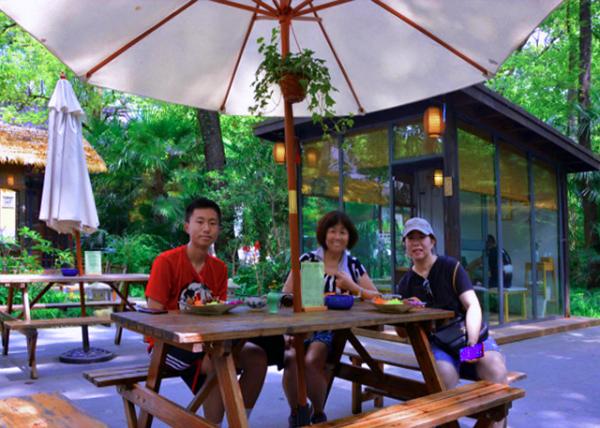 Vegetarian of Hope Valley Museum Vegetarian of Hope Valley Museum
(靈谷素齋館 08-20-2018)  Jianyan Restaurant (江宴人家 08-20-2018) Jianyan Restaurant (江宴人家 08-20-2018)
 A Riot of Color (萬紫千紅 08-20-2018) A Riot of Color (萬紫千紅 08-20-2018)
 Engraving Arts (版畫藝術 08-20-2018) Engraving Arts (版畫藝術 08-20-2018)
Crosslinks(相關博文):
China(出遊中國) 9th Grade(高中一年級) |